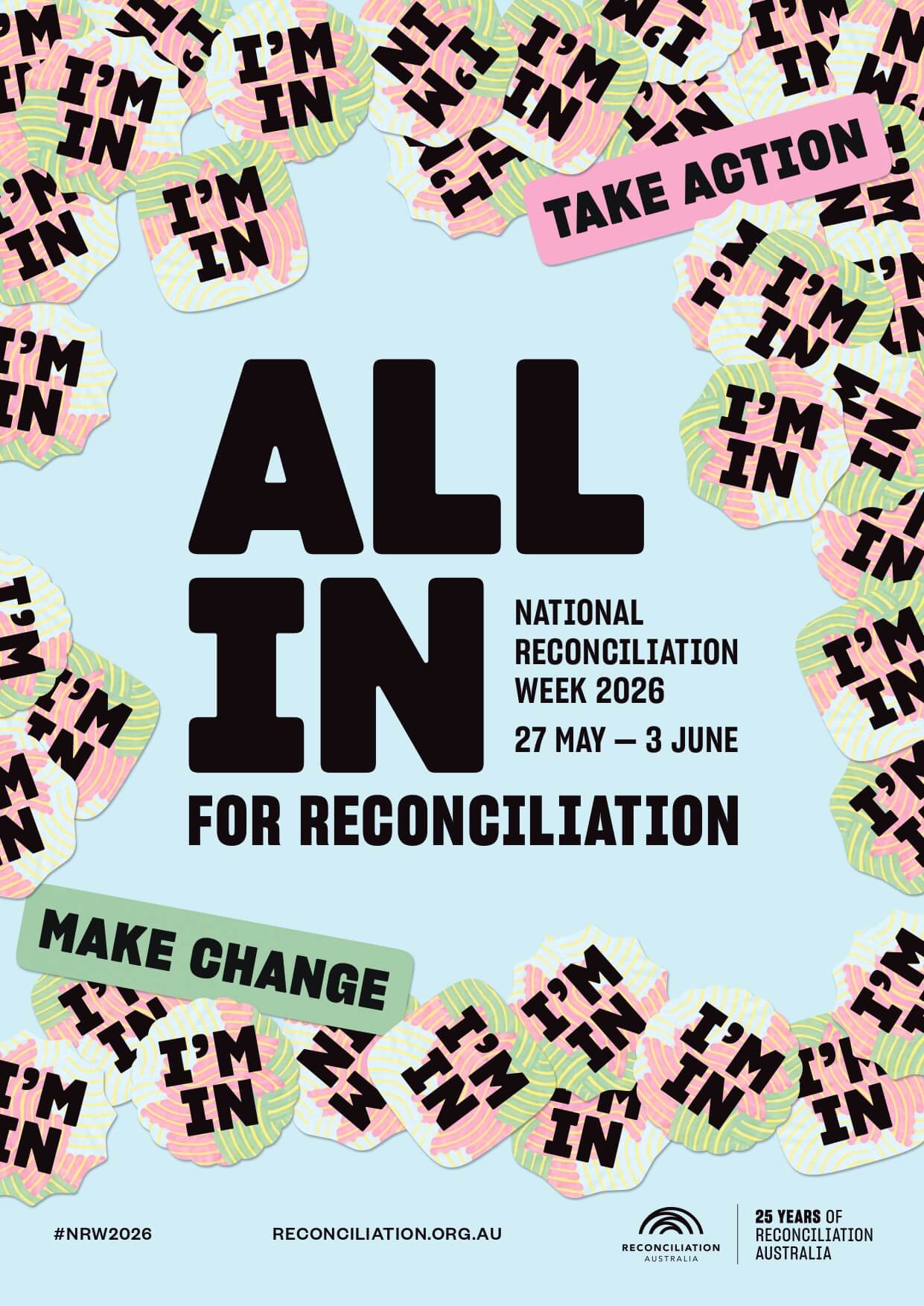
National Reconciliation Week provides an opportunity for all people in Australia to think about and take action to progress reconciliation. Learning about our shared histories, cultures, and achievements is an important way to develop understanding, respect and to challenge mis and disinformation and forge stronger relationships.
Reconciliation is about strengthening the relationship between Aboriginal and Torres Strait Islander peoples and non-indigenous people in Australia. The key pillars of reconciliation are: race relations, equality and equity, historical acceptance, institutional integrity and unity.
This year’s theme, All in, highlights that reconciliation takes collective and committed action and requires each of us to take tangible steps to create change.
During this National Reconciliation Week reflect on what steps you can take now and into the future. Information to support the organisation of an event is available on the Reconciliation Australia website.
The 1967 Referendum (27 May)
The successful 1967 referendum is a landmark event in our Reconciliation journey. Its success was the result of the strong activism of Aboriginal and Torres Strait Islander people to achieve equal rights. This led to the referendum and an overwhelming “Yes” vote. The 90.77% “Yes” vote remains the highest result in any referendum in Australia.
To understand why the 1967 Referendum was so significant, we must look at the legal landscape that existed before it. The Australian Constitution contained two specific sections that excluded and marginalised Aboriginal and Torres Strait Islander people. Section 51 gave the Commonwealth the authority to create laws for any race, with the explicit exception of Aboriginal people, and Section 127 excluded Aboriginal and Torres Strait Islander people from being counted in the census. Such institutional racism had an ongoing impact on the rights and freedoms of Australia’s First Nations people.
The successful outcome of the referendum meant that Aboriginal and Torres Strait Islander people would be counted in the census and the Federal Government would have the power to make laws for them.
Mabo Day (3 June)
3 June is the anniversary of the 1992 High Court Mabo decision. This decision recognised the ownership rights of the Meriam people to their land, overturned the myth that Australia was terra nullius and established Native Title.
Terra nullius falsely claimed that Australia belonged to no one and was used to justify British rule and ownership of the land. The achievements of Eddie Mabo and the other claimants is testament to the continued activism of Aboriginal and Torres Strait Islander people and is a reminder to us all that collective, committed and sustained action is needed to achieve reconciliation.
To move forward, we must:
- recognise the ongoing impact of institutional racism
- actively challenge racist behaviours and stereotypes in our daily lives
- support Aboriginal and Torres Strait Islander led initiatives and take action to create a more equitable and socially inclusive society.